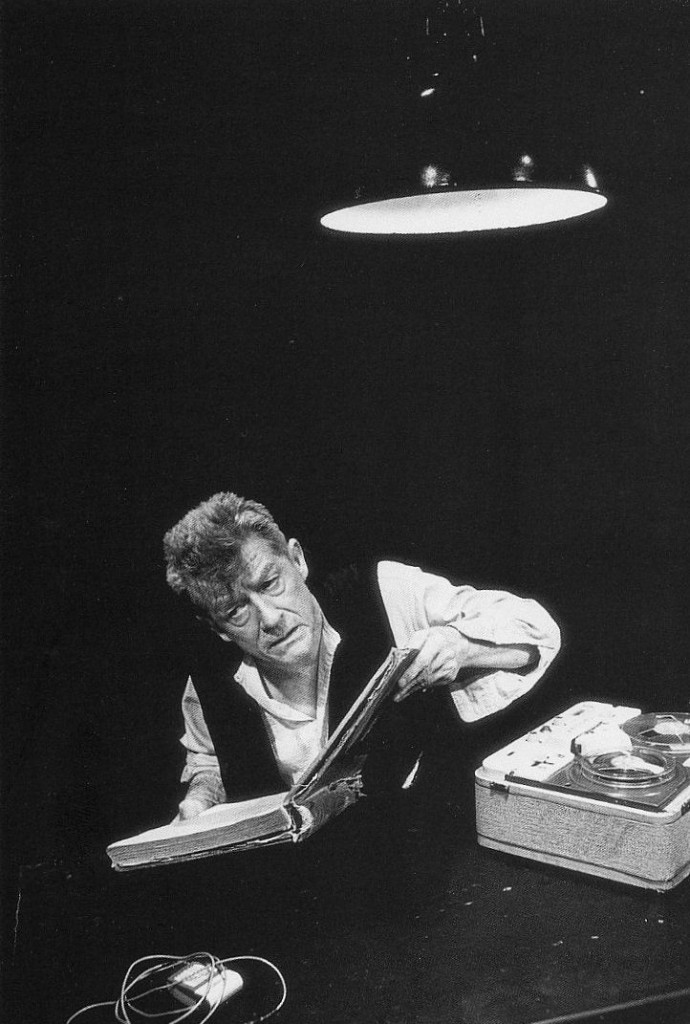
 Krapp’s Last Tape suggests an updating of relationships between the Proustian ‘involuntary memory’ and Proust’s project of refinding time and place via the act of consciously recording memory; the evocative power of the petite madeleine and the conscious act of recollection of time and place become one in A la recherche du temps perdu. Proust often plays out these different kinds of memory via references to music, such as the episode of Vinteuil’s sonata. Proust’s character M. Swann is initially affected by the music a year before the events being narrated but does not recognize it and has no way of finding out what it is. The following year, at a soiree, Swann rediscovers the music and is this time affected not by the immediate perception of it, but by the memory of it.
Yet, even on the first listen, memory was at work. As Proust describes the impossibility of capturing music due to its fleetingness, he describes memory, in a manner that utilizes an understanding of memory as place, as ‘a labourer working to put down lasting foundations in the midst of the waves, by fabricating for us facsimiles of these fleeting phrases’. On Swann’s rediscovery of the music, however, he is furnished with a better way of keeping hold of it: ‘now he could ask the name of his stranger … he possessed it, he could have it in his house as often as he liked, try to learn its language and its secret.’ Proust here combines music, place and memory in a number of ways: firstly, Swann’s initial exposure to the music is described in terms of the fleetingness of spatial perception; secondly, his mind attempts to hold onto the music via the swift erection of memory places; thirdly, he is now able have the music ‘in his house’ where he can guard it and visit it as often as he likes.
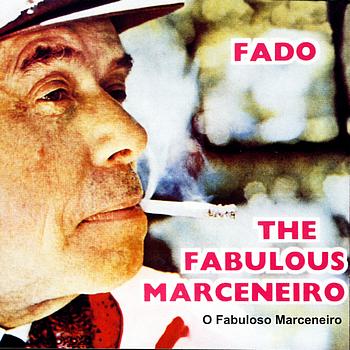
An example of this process from the world of fado is provided in the figure of Alfredo Marceneiro. Marceneiro did not record extensively, preferring to sing live in the casas de fado in which he was a legendary figure. The contrast between this ‘authentic’ but undocumented world of fado performance and the promise of reproducibility are hymned in the liner notes to the 1960 album The Fabulous Marceneiro:
Here is, at last in high-fidelity, his husky voice, plaintive to the point of near-disintegration, singing fados, tilting melodies that intoxicate like wine. All this we can hear on record for the first time; and those who had the privilege of actually seeing him (a privilege he is jealous of granting) will recall the small figure, the wrinkled face contrasting with the surprisingly black, wavy hair, the swaying body accompanying the inflections of the voice, the silk neckerchief significantly protecting his throat from the outrages of time and weather: the true ‘fadista’, the living legend … For years and years we had been trying to get him to grant us a recording session in high-fidelity. When at last he bowed to our entreaties and could bring himself to come to our studio he was disgusted. He hates machines and things to ‘interfere’ with his fado (he hates ‘progress’ anyway). So he tried to sing with closed eyes not to see the outrage. And when that proved insufficient he grabbed his neckerchief, tied it round his eyes and started to sing all over again in complete darkness. Yet, it is to high-fidelity that we owe this rare joy: the fabulous, reluctant Marceneiro singing for us, in our homes, as many times as we please.
There is much to note here. Most of the points are based around the opposition between Marceneiro as an authentic, and somehow primitive, fadista and the producers and consumers involved in the recording process, who, while perhaps inauthentic, at least have ‘progress’ on their side. The ‘disintegration’ associated with Marceneiro’s voice is not only an aesthetic statement (although as an aesthetic statement it works quite well at pinning down the unsettling nature of his vocal style), but also a comment on a kind of loss that is extra to the loss of saudade being hymned by the singer: the fact that we might lose this voice to the ‘outrages of time and weather’. Without ‘high-fidelity’ recording we would have to rely on memory, just as those who ‘had the privilege of actually seeing him’ have had to do until now. But the recording promises to do more than just fix the voice; on hearing it, we will be able to recall the man himself.
Writing is as important as audio recording here in at least two ways that may not immediately be obvious and which are not stated explicitly. Those behind the recording, along with its consumers, are associated with writing while Marceneiro is associated with speech and the oral tradition. Those of us who have not been fortunate enough to witness Marceneiro in the flesh have been able to read a description of him penned by C. B. Carvalho, meaning that we now possess an image to accompany our listening. Marceneiro, meanwhile, can sing in complete darkness and without the help of a lyric sheet, summoning up the verses from somewhere deep inside him (no mean feat with a lengthy song like ‘Lembro-Me de Ti’. In this sense he is, as Paul Ricoeur says of musicians, an ‘athlete of memory’, set apart from the everyday person even as he lives his authenticity. Finally, of course, there is the resonant echo of Proust in the closing declaration that we may now possess this elusive moment and relive it ‘as many times as we please’.
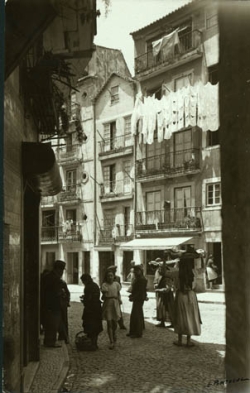
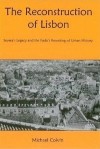 As Michael Colvin suggests, fados that bemoan the destruction and mourn the loss of the old Mouraria also come to stand as witnesses of the lost city, not only in recordings but also in forming the points of reference and even source materials for scholarly works on fado, such as Colvin’s own discussion of the neighbourhoods ‘condemned to progress’ by the Estado Novo. The parts of the lower Mouraria that were left, such as the sixteenth-century hermitage of Nossa Senhora da Saude, become fetishized as remainders of the past: ‘The hermitage’s anomolic condition, perched unscathed among unsophisticated shopping centres and cement fountains … has made it a symbol of tradition in a Lisbon compelled to modernization.’ Fado, meanwhile, can act as a subversive text when highlighting not only the lost past but the wrong decisions made about the future: ‘Gabriel de Oliveira’s “Há Festa na Mouraria” has inspired a subversive trend in the fado novo: the idealization of a pre-Republican Mouraria … as an alternative to the Estado Novo’s notion of progress’. If we compare the Maurilia of Calvino’s work with the Mouraria of fado songwriters we find a similar obsession with the city of the past, albeit articulated rather differently. Where Calvino’s narrator warns against praising the old at the expense of the new, many of the fados discussed by Michael Colvin have taken Mouraria as their subject matter have taken the opposite view. (See Michael Colvin, ‘Gabriel de Oliveira’s “Há Festa na Mouraria” and the Fado Novo’s Criticism of the Estado Novo’s Demolition of the Baixa Mouraria’, Portuguese Studies, 20 (2004) and his book The Reconstruction of Lisbon.)

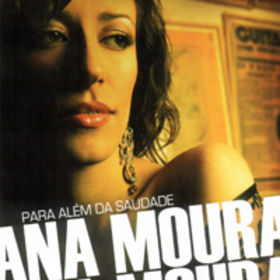
 Moura’s fourth album, first released in Portugal in late 2009, arrives on the back of a steadily growing fanbase and an increasing international visibility. It shouldn’t disappoint either her existing fans or those open to the twists and turns enacted on tradition by the so-called “new fadistas” of the last decade or so. Fernando is once more at the helm, providing production, guitar, and songwriting skills (more than half of the songs are written or co-written by him). In addition to Fernando, Moura is accompanied by the brilliant Custódio Castelo on guitarra portuguesa and Filipe Larsen on acoustic bass. The high production values evident on previous releases are extended to the production of the CD booklet, which includes (for once, excellent) English and French translations of the Portuguese lyrics.


 The Place of Longing