
Here the sea ends and the earth begins. It is raining over the colorless city. The waters of the river are polluted with mud, the riverbanks flooded. A dark vessel, the Highland Brigade, ascends the somber river and is about to anchor at the quay of Alcântara. The steamer is English and belongs to the Royal Mail Line. She crosses the Atlantic between London and Buenos Aires like a weaving shuttle on the highways of the sea, backward and forward, always calling at the same ports, La Plata, Montevideo, Santos, Rio de Janeiro, Pernambuco, Las Palmas, in this order or vice versa, and unless she is shipwrecked, the steamer will also call at Vigo and Boulogne-sur-Mer before finally entering the Thames just as she is now entering the Tagus, and one does not ask which is the greater river, which the greater town.
(José Saramago, The Year of the Death of Ricardo Reis, tr. Giovanni Pontiero (London: Harvill, 1992 [1984]), p. 1.)
So begins The Year of the Death of Ricardo Reis, the classic novel by José Saramago, the Portuguese writer who died today at the age of 87. The combination of the potentially fantastic and the banal, the metaphoric and the everyday, is typical of Saramago. There is always a sense in his prose that, whatever the story he might be telling us, there are a multitude of stories framing it, running alongside it or visible just beyond its borders. Saramago wants us to know that those stories, which are sometimes really observations (as all stories are observations, ways of seeing the world) and sometimes fantastical retellings of official history, need to be included in the story he is telling us, such that we imagine, or he lets us believe we imagine, that what is unfolding in the labyrinth of his text is one, unending metastory. Frequently, in his wandering, loosely punctuated prose–sometimes described as magical realism, sometimes as stream-of-consciousness, but perhaps just as easily though of as the flow of history running all around us and threatening to drown us in the present–he will take us sidestepping through the fragile walls that separate these universes, giving us a glimpse of the bigger picture before shuttling us back to the scene in which this particular story is taking place.
One does not ask which is the greater river, which the greater town. In The Year of the Death of Ricardo Reis, we know which town we have settled in. The novel tells the story of the dead writer Fernando Pessoa returning to visit one of his surviving heteronyms, the classically minded poet Ricardo Reis. In fact Pessoa is not quite dead, but rather existing in the exile of limbo while he awaits a more permanent death. Reis, too, is an exile, returning to Lisbon in the opening scene of the book after a period in Brazil. Over the course of the book, Reis is constantly witnessed wandering the streets of Lisbon in a recurrent pattern that, spelled out on the sidewalks and in Saramago’s wandering prose, symbolizes his brief presence in the city as a kind of psychogeographer. Like Paul Auster’s New York Trilogy, Michel de Certeau’s The Practice of Everyday Life and Iain Sinclair’s Lights Out For The Territory, the citizen as walker is both reader and writer, at once subject to the pre-existing paths laid out in the city text and yet able to assert an agency via the sheer act of activity. But Ricardo Reis is not long for this world–he can not be seen, in however magical a reality, to exist beyond the fading memory of his recently deceased creator, Pessoa–and he always seems to be at the mercy of what Italo Calvino calls the ‘intuition of the city as language, as ideology, as the conditioning factor of every thought and word and gesture … as monstrous as a giant crustacean, whose inhabitants are no more than motor articulations’.
Here is Saramago’s description of one of Ricardo Reis’s strolls:
Ricardo Reis walks up the Rua do Alecrim, and no sooner has he left the hotel than he is stopped in his tracks by a relic of another age, perhaps a Corinthian capital, a votive altar, or funereal headstone, what an idea. Such things, if they still exist in Lisbon, are hidden under the soil that was moved when the ground was leveled, or by other natural causes. This is only a rectangular slab of stone embedded in a low wall facing the Rua Nova do Carvalho and bearing the following inscription in ornamental lettering, Eye Clinic and Surgery, and somwhat more austerely, Founded by A. Mascaró in 1870. Stones have a long life. We do not witness their birth, nor will we see their death. So many years have passed over this stone, so many more have yet to pass, Mascaró died and his clinic was closed down, perhaps descendants of the founder can still be traced, they pursuing other professions, ignoring or unaware that their family emblem is on display in this public place. If only families were not so fickle, then this one would gather here to honor the memory of their ancestor, the healer of eyes and other disorders. Truly it is not enough to engrave a name on a stone. The stone remains, gentlemen, safe and sound, but the name, unless people come to read it every day, fades, is forgotten, ceases to exist. These contradictions walk through the mind of Ricardo Reis as he walks up the Rua do Alecrim…
(pp. 46-7)
Poetry, fantasy, the monumental and the everyday, the eternal and the transient, memory, loss, pathos, and the humour of pessimism: all this exists in Saramago’s late voice. He will be missed.
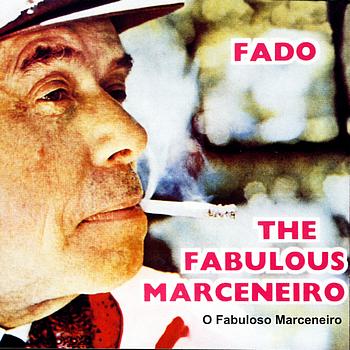
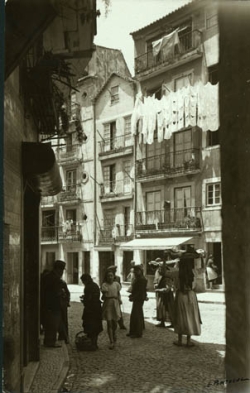
 As Michael Colvin suggests, fados that bemoan the destruction and mourn the loss of the old Mouraria also come to stand as witnesses of the lost city, not only in recordings but also in forming the points of reference and even source materials for scholarly works on fado, such as Colvin’s own discussion of the neighbourhoods ‘condemned to progress’ by the Estado Novo. The parts of the lower Mouraria that were left, such as the sixteenth-century hermitage of Nossa Senhora da Saude, become fetishized as remainders of the past: ‘The hermitage’s anomolic condition, perched unscathed among unsophisticated shopping centres and cement fountains … has made it a symbol of tradition in a Lisbon compelled to modernization.’ Fado, meanwhile, can act as a subversive text when highlighting not only the lost past but the wrong decisions made about the future: ‘Gabriel de Oliveira’s “Há Festa na Mouraria” has inspired a subversive trend in the fado novo: the idealization of a pre-Republican Mouraria … as an alternative to the Estado Novo’s notion of progress’. If we compare the Maurilia of Calvino’s work with the Mouraria of fado songwriters we find a similar obsession with the city of the past, albeit articulated rather differently. Where Calvino’s narrator warns against praising the old at the expense of the new, many of the fados discussed by Michael Colvin have taken Mouraria as their subject matter have taken the opposite view. (See Michael Colvin, ‘Gabriel de Oliveira’s “Há Festa na Mouraria” and the Fado Novo’s Criticism of the Estado Novo’s Demolition of the Baixa Mouraria’, Portuguese Studies, 20 (2004) and his book The Reconstruction of Lisbon.)
 If the impossibility of dealing with loss comprehensively has led to a sense of a ‘task’ to be achieved, then it is perhaps no surprise to find the term ‘memory work’ increasingly used in contemporary cultural theory. And if one method of going about this work is to employ a ritualistic, or repetitive, process for ‘listing’ loss, then it is worthwhile considering an example of just such memory work, from what I call the ‘I remember’ school of writers inspired by Joe Brainard’s book of the same title. I Remember was first published in 1975 and consisted of a series of entries, all beginning with the words ‘I remember’, in which Brainard recollected moments from his past, some of them highly individual and others doubtless shared by an enormous number of his contemporaries. To take a typical trio of consecutive entries:
 That is not to say, however, that such memory work is necessarily translatable to other cultural contexts. Although Brainard’s book was translated into French by Marie Chaix, the French ‘version’ of I Remember which found most success and which has itself come to be regarded as a classic of the genre, is Georges Perec’s Je me souviens (1978). Perec reduces the autobiographical elements of Brainard’s work to a certain extent, although these are still a prominent feature of his version alongside a higher proportion of memories likely to be shared with others. In producing a more pronounced cultural bias to the book, Perec is forced away from literal translation and towards the creation of a new work steeped in the resonance of the French imaginary. Perec’s intention was to seek out, via his own recollection, moments of memory that could be ‘deconsecrated’ and returned to their ‘collectivity’; speaking about the book he claimed, ‘what came out most clearly for me was that I wasn’t the only one to be remembering. It’s a book I might call “sympathetic”, I mean that it’s in sympathy with its readers, that readers are perfectly at home in it.’
 The fact that Perec’s work increased the ratio of culturally shared to personal memories from Brainard’s original was recognized in 1986 by the British writer Gilbert Adair when he decided to publish his own version of the ‘I remember’ template in his book Myths & Memories. The book was devised partly as a homage to two French writers he admired, Roland Barthes and Georges Perec, and partly as an attempt to apply the techniques of Barthes’s Mythologies and Perec’s Je me souviens to a British context. In Adair’s opinion, Perec’s version of Brainard’s work was distinct enough to warrant its own ‘translation’ but a literal rendering of the French words would be pointless: ‘the fact of its being anchored in a French experience has rendered [Je me souviens] definitively untranslatable; or, rather, translatable only by way of the metamorphosis, the kind of total Anglicizing, which it undergoes here.’ (This observation has an obvious correlation with my earlier discussion of saudade. As for a Portuguese language version of I Remember, the closest parallel would appear to be a Brazilian text entitled Memorando, by Geraldo Mayrink and Fernando Moreira Salles (Sao Paulo: Companhia das Letras, 1993). I have not been able to consult this text to see how it compares with the three versions mentioned here.)
 Adair’s conflation of the work of Barthes and Perec serves as an intriguing invitation to think about the concept of mythology alongside that of memory. This has been a strategy taken up by a number of historians in recent years, especially those concerned with memory’s associations with place. Prominent amongst these have been Raphael Samuel and Pierre Nora. Samuel’s ‘theatres of memory’ and Nora’s lieux de mémoire are both influenced by the work of Frances Yates, whose exploration of ‘the art of memory’ relies on notions of myth and place, yet there is an equally important role played by repetition – indeed, memory thought of as an art is born of the desire to be able to repeat. In this sense, it is interesting to note a connection between these historians and the work of the ‘memorians’ of the ‘I remember’ school. In the latter we find a recourse to a ritualistic process (anamnesis, recollection) grounded in the repeated act; this repetition is continued in the representation of memory as these writers follow the unchanging mantra of ‘I remember…’.
 The Place of Longing