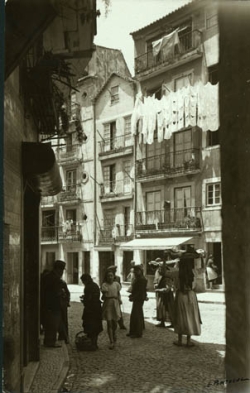
Mouraria 1932
It may be the case that, as Svetlana Boym claims, ‘places in the city are not merely architectural metaphors; they are also screen memories for urban dwellers, projections of contested remembrances.’ However, I would also suggest that it is necessary to keep in play the relationship between these types of space. I believe that fado song texts allow us to think of the city as both context and symbol. Taking on the dual roles of character and stage, the city acts very much as it might in a photograph or film; the same shift of focus from the cityscape to the human life within the cityscape occurs in fados, photographs and films. With the numerous references to the old city – the lost city that was the victim of demolition and renovation – the fado text becomes a snapshot of the past, rendered in sepia and always in danger of fading from view, of failing to be fixed for posterity.
Italo Calvino uses the imagery of the postcard to illustrate the role of the remembered city and the problems it forces upon both visitors and inhabitants, who find themselves contemplating it from the location of the remoulded city. Calvino describes Maurilia, one of his ‘invisible cities’, thus:
In Maurilia, the traveler is invited to visit the city and, at the same time, to examine some old post cards that show it as it used to be: the same identical square with a hen in the place of the bus station, a bandstand in the place of the overpass, two young ladies with white parasols in the place of the munitions factory. If the traveler does not wish to disappoint the inhabitants, he must praise the postcard city and prefer it to the present one, though he must be careful to contain his regret at the changes within definite limits: admitting that the magnificence and prosperity of the metropolis Maurilia, when compared to the old, provincial Maurilia, cannot compensate for a certain lost grace, which, however, can be appreciated only now in the old post cards, whereas before, when that provincial Maurilia was before one’s eyes, one saw absolutely nothing graceful and would see it even less today, if Maurilia had remained unchanged; and in any case the metropolis has the added attraction that, through what it has become, one can look back with nostalgia at what it was.
(Italo Calvino, Invisible Cities, p. 30.)
One reason the city can be a source of nostalgia is that, despite the history of appeals to a rural Arcadia, the city of the past only ever survives as a fragment of the city of the present and loss is always referenced. The city is never static but is always rebuilding itself; the longing for stasis that has so often been connected to the (falsely remembered, idealized) countryside can as easily be transferred to the (falsely remembered, idealized) city of the past. The longing that is felt is the desire to see through the palimpsest that is the modern city.
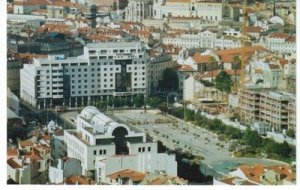
 As Michael Colvin suggests, fados that bemoan the destruction and mourn the loss of the old Mouraria also come to stand as witnesses of the lost city, not only in recordings but also in forming the points of reference and even source materials for scholarly works on fado, such as Colvin’s own discussion of the neighbourhoods ‘condemned to progress’ by the Estado Novo. The parts of the lower Mouraria that were left, such as the sixteenth-century hermitage of Nossa Senhora da Saude, become fetishized as remainders of the past: ‘The hermitage’s anomolic condition, perched unscathed among unsophisticated shopping centres and cement fountains … has made it a symbol of tradition in a Lisbon compelled to modernization.’ Fado, meanwhile, can act as a subversive text when highlighting not only the lost past but the wrong decisions made about the future: ‘Gabriel de Oliveira’s “Há Festa na Mouraria” has inspired a subversive trend in the fado novo: the idealization of a pre-Republican Mouraria … as an alternative to the Estado Novo’s notion of progress’. If we compare the Maurilia of Calvino’s work with the Mouraria of fado songwriters we find a similar obsession with the city of the past, albeit articulated rather differently. Where Calvino’s narrator warns against praising the old at the expense of the new, many of the fados discussed by Michael Colvin have taken Mouraria as their subject matter have taken the opposite view. (See Michael Colvin, ‘Gabriel de Oliveira’s “Há Festa na Mouraria” and the Fado Novo’s Criticism of the Estado Novo’s Demolition of the Baixa Mouraria’, Portuguese Studies, 20 (2004) and his book The Reconstruction of Lisbon.)
Here, the city becomes both ‘theatre of memory’ and museum. It is not a museum that demands the silent contemplation of a preserved site but a modern, interactive museum, more akin to a performance space, where, as Kimberly DaCosta Holton points out, the ‘occularcentrism’ of traditional anthropology has been converted into an appeal to all the senses. Yet, while museums have developed methodologies to bring the object ever closer to a point of virtual reality, the Baudrillardian conquest of the signifier over the signified has yet to come about. This is in large part due to the act of ‘roping off’ that provides the necessary borderline between viewer and viewed; this may entail literal ropes, or it may involve a border of another sort, be it the walls of the museum or the entrance gate to the theme park, or the recorded boundaries of a song.
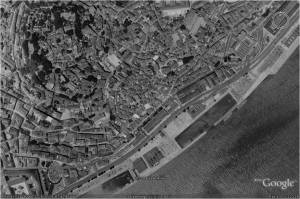
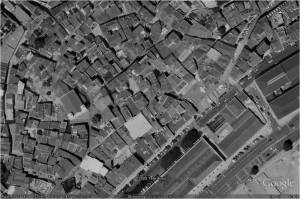
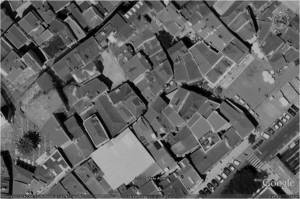
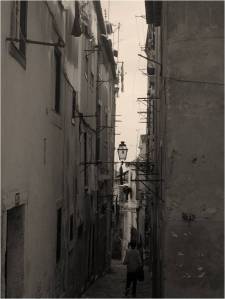


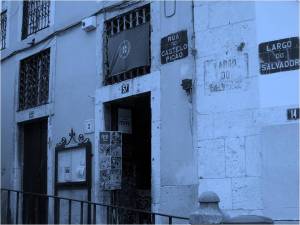

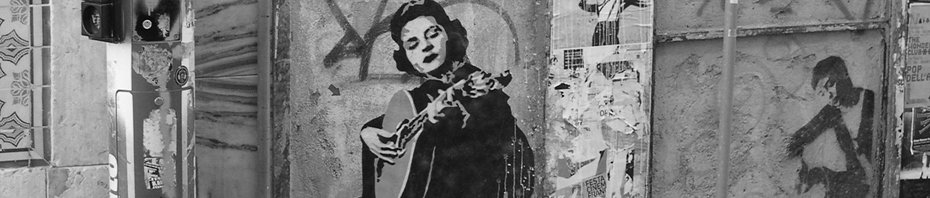
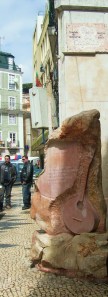 ‘É Noite na Mouraria’ [It’s Night in Mouraria], a fado performed by Amália Rodrigues and her sister Celeste, moves us toward a more particular location. Later recorded by Katia Guerreiro and Mísia, it is a typical ‘atmosphere’ song, listing a number of the mythemes we have come to expect from a fado narrative: the low sound of a guitarra, a fado being sung in a dark alleyway, the whistle of a boat on the Tejo, a passing ruffian. This fado works as a companion piece to the classic song of fado’s ontology, ‘Tudo Isto É Fado’; the delivery is not dissimilar, comparable mythemes are present, and there is a declaration in the song that ‘all is fado / all is life’. Mouraria is also represented in fados that mention the Rua da Capelão, linked forever to the name of Maria Severa and to the birth of modern fado. The most famous, ‘Rua do Capelão’ (with words by Júlio Dantas and music by Frederico de Freitas), places the street at the centre of the Severa story. The site of Severa’s house is now commemorated in a very Portuguese fashion, having its own dedicated pattern in the calçada, the white and black cobbled pavements found throughout Lisbon. At the entrance to the street there is also a monument to mark its place in history, consisting of a sculpture of a guitarra with the words ‘Birthplace of fado’ beside it. In this way, fado does not only reflect the city’s presence, but asserts its own presence in the city. One can, if one desires, use the Rua do Capelão as the start of a walking tour of the city solely based on fadistic associations, from the labyrinth of Mouraria’s streets up the slopes surrounding the Castelo de São Jorge to the neighbourhoods of Alfama, Graça and Madragoa.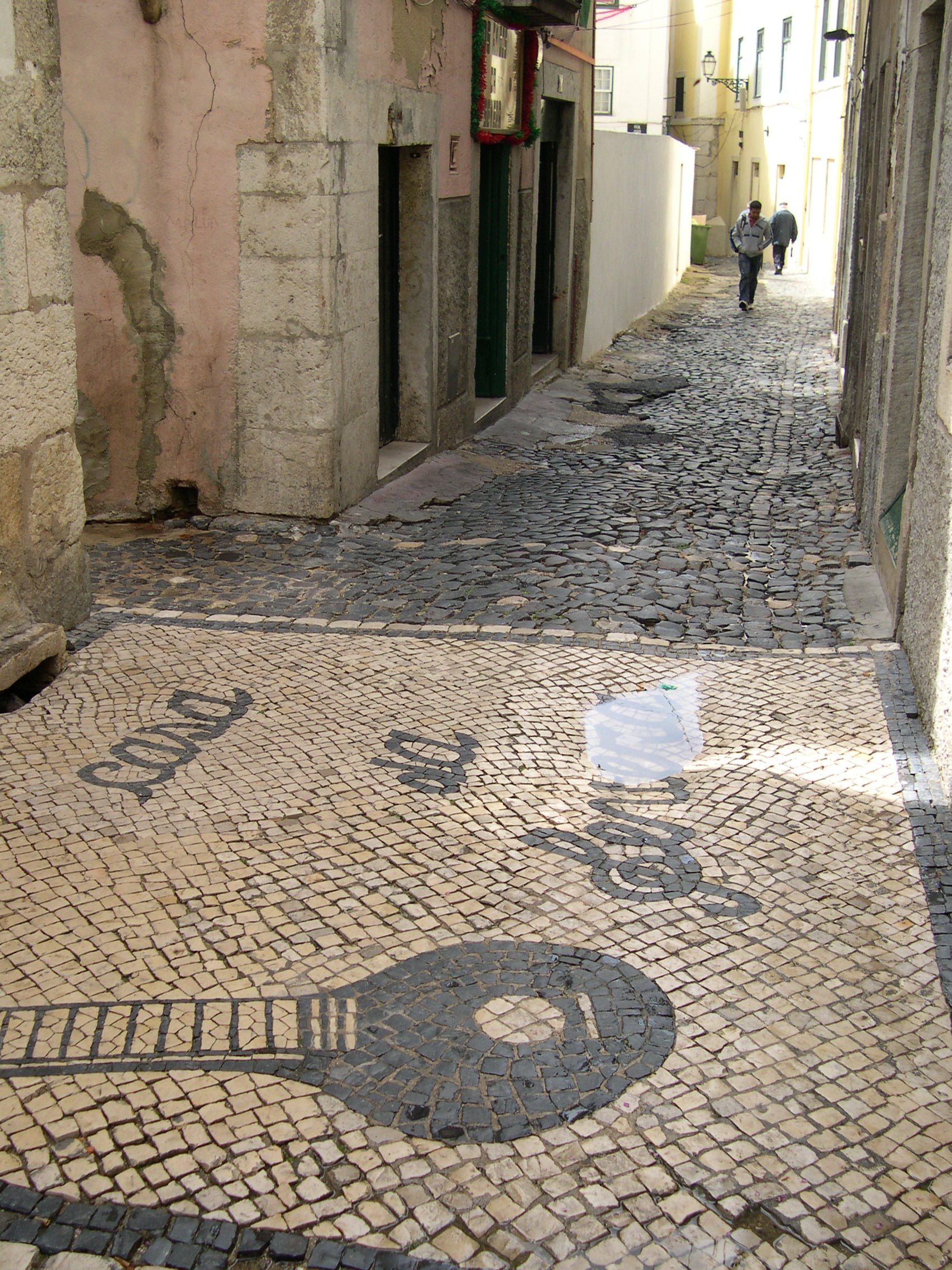

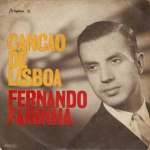 We might say, then, that the discourse surrounding Marceneiro and Farinha is one rich with ‘authenticity work’. This work is done through ceaseless reminders of the connection between the performer and the neighbourhood/city; Farinha is ‘do povo’ but also ‘da Bica’, ‘de Lisboa’ and, ultimately, ‘do fado’. From this position he could then make claims to the city and its music, as he did throughout his career. Marceneiro was a similarly ‘ordained’ commentator on the city, as can be heard on his version of Carlos Conde’s ‘Bairros de Lisboa’, where the city’s presence is introduced by the framing device of a walk through its streets. The verses, sung as a duet with Fernanda Maria, present a sort of competition between various neighbourhoods as to which is most relevant to fado: Campo de Ourique is the most elevated, Alfama is the most famous, the most fadista and maritime, Mouraria evokes the most nostalgia, Bairro Alto is praised for its inhabitants, Madragoa for its youthful optimism. In the end, there is a realization that the city should not be reduced to its parts: ‘Why go any further / If Lisbon is all beautiful / And Lisbon is our neighbourhood!’
 The Place of Longing